The Untold History of Indonesian Pottery: From Ancient Kingdoms to Modern Artisans
The Untold History of Indonesian Pottery: From Ancient Kingdoms to Modern Artisans
Indonesia’s pottery tradition is more than a craft. It is a cultural legacy shaped by centuries of daily use, trade, ritual, and artistic expression. From ancient settlements to modern villages, pottery has remained one of the most enduring forms of material culture in the archipelago. It reflects how people lived, what they valued, and how they transformed the earth into something useful and meaningful.
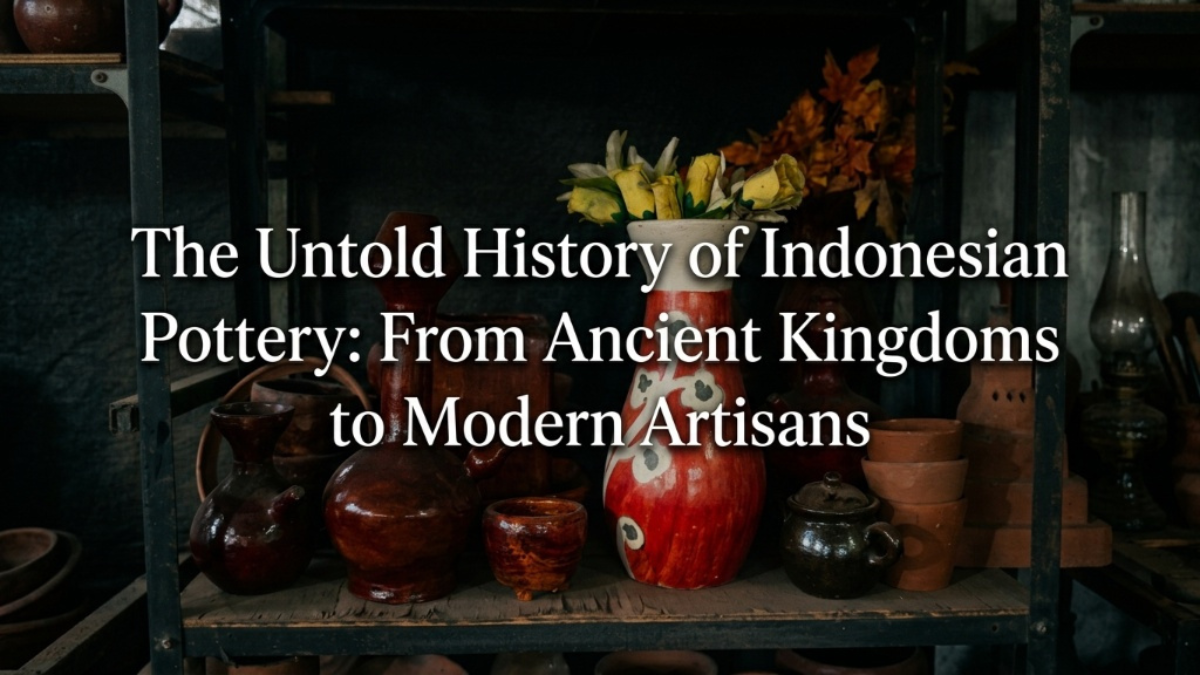
Our research in Alaskandang Village, Besuk District, Probolinggo Regency, East Java, Indonesia provides a valuable example of how this tradition continues today. In this village, pottery is not only an object of utility but also a symbol of local knowledge and cultural continuity. The handmade vessel shown in our documentation represents that living heritage: simple in form, yet rich in history and craftsmanship.

The Origins of Indonesian Pottery
The history of Indonesian pottery begins long before the rise of major kingdoms. Early communities across the archipelago used clay to create vessels for cooking, storage, and transport. These early pots were practical, handmade, and shaped by local needs. Over time, pottery became an essential part of settled life, especially in agricultural societies that depended on durable containers for grains, water, and food.
As communities became more established, pottery also developed symbolic and social meanings. What began as a household necessity gradually became a reflection of identity, skill, and tradition. This shift marked the beginning of a long and evolving relationship between Indonesian people and clay.

Pottery in the Age of Ancient Kingdoms
During the periods of Hindu-Buddhist kingdoms such as Srivijaya and Majapahit, pottery in Indonesia grew more diverse and sophisticated. Archaeological findings show that local earthenware coexisted with imported ceramics from China and other parts of Asia. This exchange through trade routes influenced forms, techniques, and decorative styles, while local makers continued to preserve their own methods.
Terracotta and earthenware from this era were not only used for daily life but also appeared in architectural and ritual contexts. Roof decorations, figurines, and containers discovered at archaeological sites reveal how deeply pottery was integrated into the cultural life of ancient Indonesia. These objects remind us that pottery was never just functional; it was also part of religion, art, and social organization.
The Role of Trade and Cultural Exchange
Indonesia’s position along major maritime trade routes made it a natural meeting point for different cultures. Chinese ceramics, Southeast Asian influences, and other foreign materials entered the archipelago through commerce and diplomacy. This exchange shaped local pottery traditions in lasting ways.
However, Indonesian artisans did not simply imitate foreign models. Instead, they adapted outside influences to local materials, tastes, and techniques. The result was a distinct pottery tradition that remained grounded in Indonesian identity while still reflecting broader regional connections. This ability to absorb influence without losing authenticity is one of the defining strengths of Indonesian craft heritage.
Traditional Pottery in East Java
East Java has long been one of the important centers of pottery production in Indonesia. The region’s clay resources, agricultural lifestyle, and village-based craftsmanship have supported pottery-making for generations. In many local communities, pottery remains a family skill passed from elders to younger members through observation and practice.
In villages such as Alaskandang, pottery continues to be shaped by hand and fired using traditional methods. The process requires patience, precision, and deep knowledge of the material. Clay must be prepared carefully, shaped with skill, dried correctly, and fired at the right temperature. Even a small mistake can affect the final result, which is why experience matters so much in this craft.
The Meaning of Handmade Pottery
Handmade pottery carries a special value that factory-made products often cannot replace. Each vessel is slightly different, showing the touch of the artisan who created it. These small variations are not flaws. They are signs of authenticity.
The vessel in our documentation reflects this character clearly. Its reddish-brown tone, natural texture, and scalloped rim suggest a handmade process rooted in traditional earthenware techniques. It is an object that serves a practical purpose while also expressing the visual language of local craft. In this way, pottery bridges function and beauty.
Alaskandang Village as a Living Craft Site
Our research in Alaskandang Village, Besuk District, Probolinggo Regency shows that pottery remains part of daily cultural life in rural East Java. Villages like this are important because they preserve traditional knowledge that might otherwise be lost in the shift toward industrial production. Pottery here is not treated as a museum artifact. It is part of a living practice.
This living tradition includes material selection, shaping methods, firing knowledge, and community habits. Each stage reflects an understanding of land, labor, and season. By studying pottery in Alaskandang Village, we gain insight into how local artisans maintain continuity while adapting to modern needs.
Pottery in Modern Markets
Today, Indonesian pottery is valued in both local and international markets. Many consumers are drawn to handmade products because they feel more personal, sustainable, and culturally meaningful. This growing interest has helped traditional artisans find new opportunities, especially through tourism and online sales.
At the same time, the modern market has created new challenges. Cheaper industrial products often compete with handmade pottery on price and availability. For this reason, storytelling has become increasingly important. A strong product narrative helps customers understand the cultural value behind each piece and appreciate the skill involved in making it.
Why Indonesian Pottery Still Matters
Indonesian pottery matters because it connects the present to the past. It preserves knowledge about materials, techniques, and community life that has survived for generations. It also reminds us that handmade objects can still have relevance in modern life.
For local communities, pottery is not only about economic value. It is about identity, continuity, and pride in inherited skills. For wider audiences, it offers a tangible way to understand Indonesian culture beyond books and museums. Each vessel tells a story of earth transformed by human hands.
Conclusion
The untold history of Indonesian pottery is a story of resilience, adaptation, and creativity. From the ancient kingdoms of the archipelago to the artisans working today in villages like Alaskandang, pottery has remained a vital part of Indonesian life. It has carried water, stored food, marked rituals, and expressed cultural identity across centuries.
Our research in Alaskandang Village, Besuk District, Probolinggo Regency, East Java, Indonesia shows that this tradition is still alive. The handmade vessel in our documentation is not just a product. It is a piece of living heritage, shaped by local knowledge and sustained by generations of craft. In a modern world dominated by mass production, it stands as a reminder that some of the most meaningful objects are still made by hand.